 Our Story
Mango Season at the Farm: A Year in Rajamallu's Orchard (2026)
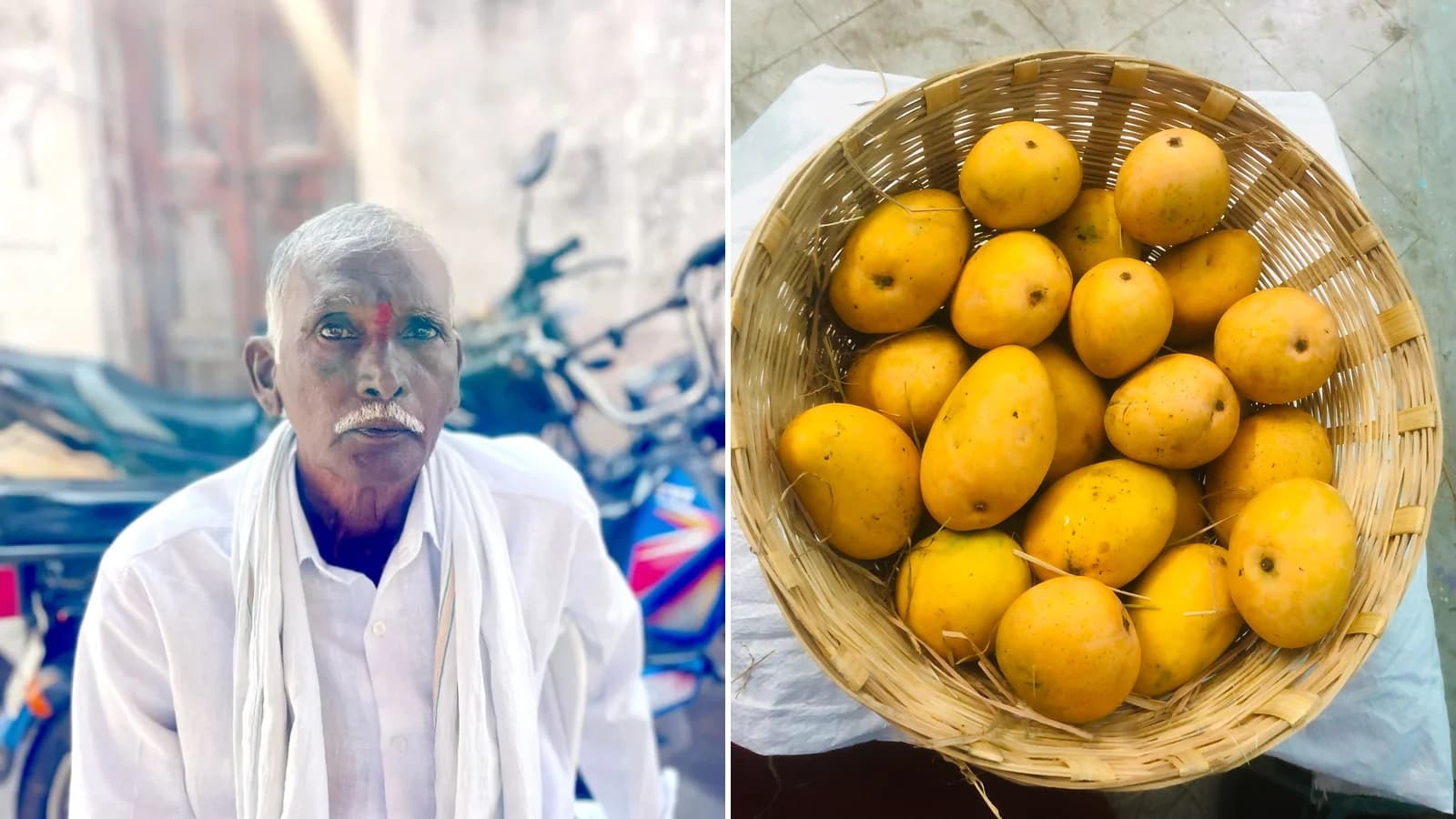
A mango box takes about a week to reach you. The season behind it takes the whole year. This is how mango season actually unfolds at Rajamallu's orchard in Telangana, the same trees my grandfather has walked before sunrise for more than forty years, and why the timing matters more than most people ever think about.
Winter: the flowering nobody sees
Long before anyone is thinking about mangoes, the trees are already deciding the season. Through the cool months, the orchard breaks into flower. Thousands of tiny panicles open across every tree, and for a few weeks the whole farm smells faintly of them.
This is the nervous part of the year. A bad spell of unseasonal rain or a hot swing at the wrong moment can knock the flowering back and thin the whole harvest months before a single fruit is picked. Rajamallu reads it the way he reads everything else on the farm, by being there. "You cannot learn that in a classroom," he says. "It takes years of standing in an orchard and paying attention."
Spring: the long wait while the fruit fills
After the flowers set, the waiting begins. Small green mangoes appear and slowly size up over the following weeks. Nothing about this can be rushed. The tree fills the fruit at its own pace, pulling sweetness up through the season.
Different varieties keep their own clocks, which is why the farm does not ripen all at once:
- Banganapalli (also called Benishan), the large golden, low-fibre table mango that South India is known for.
- Imam Pasand, the aromatic, thin-skinned premium variety that people wait all year for.
- Totapuri, longer with a beak at the tip, brighter and tangier.
- Rasalu, soft and full of juice, the one made for pulp and for drinking straight from the fruit.
We break down how these compare for gifting in our guide to Alphonso vs Banganapalli vs Kesar, but on the farm they are simply four trees on four schedules.
Summer: the pre-sunrise harvest
By the hot months the orchard is heavy, and the real work begins. Rajamallu still walks the rows before sunrise every morning, checking tree by tree the way you check on someone in your family. He can tell a mango is two days from ready by the way it sits on the branch.
That single judgement is the whole game. Pick too early and the fruit never develops its sweetness. Pick too late and it will not survive the journey to you. So the fruit comes off the tree firm, at the right moment, and is never touched with carbide or any other chemical to force it. It ripens on its own over the next day or two, which is exactly why we tell you to let a box rest before you cut into it.
From the branch to your door
Here is the part that made us build TaruLease in the first place. For most of Rajamallu's life, traders named the price at the orchard gate, and his mangoes disappeared into a city market five hundred kilometres away, selling for three times what he received. He never knew who ate them. We wrote the whole story in why I built TaruLease.
Now the fruit goes from his orchard to your door in three to seven days. No warehouse, no carbide, no trader in the middle. Picked this week, eaten next. That short path is the difference you taste, and it is only possible because the season was watched from flowering to harvest by someone who has done it for forty years.
When to order
Telangana mango season runs roughly from spring into early summer, variety by variety. If you want fruit at its peak, the move is to reserve early in the season rather than chase it at the end, when the best trees are already spoken for. The same fruit, picked at the right moment and sent straight from the farm, is also what goes into our corporate gifting baskets, so a company gift and a family box come from the exact same orchard.
Want mangoes straight from Rajamallu's orchard this season? Visit Rajamallu's farm → | Browse the varieties →
Related: Why I built TaruLease · Sending fresh mangoes to Mumbai · A new perspective on corporate gifting